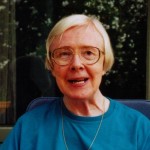
Dolor tam acerbus preferendus est nulli(Nobody should have to suffer like this)Patricia was diagnosed as probably having the Striato Nigral Degeneration (SNA) form of Multiple System Atrophy. Autopsy after her death confirmed this diagnosis. Many people, when they discover they have a severe terminal illness, have difficulty coming to terms with it, and that is quite understandable. Sometime circa 1998 Patricia wrote a letter saying how she felt about “her shaking palsy’ as she described it then. It is quite a beautiful letter and has touched everyone that has read it. She gave her permission to put it on this web page and you can read it here. (http://www NULL.class-of-1952 NULL.com/Palsy NULL.doc) |
![]() |
| Patricia circa 1999/2000 |
| Patricia was born in Bright, Victoria, Australia in 1938, the eldest of five children. She attended Bright Higher Elementary School and Mac.Robertson Girls’ High School in Melbourne. She then went to Melbourne University where she obtained a BA (Honours) degree in History. She taught at Benalla High and then at Mac.Robertson Girls’ High School. |
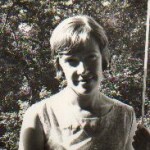
![]() |
| Patricia in Singapore 1965 |
| She taught for three years and then joined the Defence Department, Defence Signals Division where she worked for many years as a Research Officer, translator and report writer. She took a break for 12 years while she had three boys and brought them up. |
![]() |
| Pick the beauty |
| She had to leave the Defence Signals Division when it relocated to Canberra and took a job as a lexicographer with a company that was designing and building a computerised Indonesian to English translator. Her job was to help build the computerised dictionary.Patricia became aware of symptoms of what she termed the “Shaking Palsy” during 1993 with changes to her handwriting. |
First signs |
| Patricia became aware of symptoms of what she termed the “Shaking Palsy” during 1993 with changes to her handwriting. Looking back over previous years she had noticed that her writing, though fluent, had been getting smaller, and she had kept trying out new pens. She self-diagnosed (as Parkinson’s Disease) in about September 1994 and this was confirmed by a neurologist in November of that year. She thought I was unaware of her suspicions, but I had been observing her shuffling gait for some time, often suggesting she “pick her feet up”! By this time, the similarities to her father were striking. Her father had been diagnosed with Parkinson’s Disease (PD) but died about a year later from a heart attack. Patricia decided not to start medication straight away. When she did start medication, she started on small dosages of Levadopa-Carbidopa (Sinemet) in about March 1996. This was mainly to please me as she felt that I was distressed by the signs of increasing Parkinsonism, but also because she was finding the rigidity annoying. |
![]() |
| Patricia with me as the guide (early 2000) |
| In mid-1996 Patricia’s neurologist said that he was unhappy with her sluggish chin reflex as he was with her other reflexes, which, he said, were too “sharp”. An MRI scan of the upper spine showed only normal degeneration. Later in the year her neurologist expressed doubts that her illness was true PD, and might be one of a number of similar conditions that had the same symptoms. She had another MRI scan, this time of the brain, and was also referred to another neurologist for a second opinion. The MRI revealed only “changes consistent with PD and not something worse”. The second neurologist endorsed the original diagnosis and suggested she add Bromocriptine (Parlodel) to the Levadopa-Carbidopa.All this time her condition had continued to deteriorate. She was “freezing” and in 1996 began to stammer. She was referred to a Movement Disorders Clinic for outpatient physiotherapy, occupational and speech therapy. By then she was using a walking stick. She had another consultation with the second neurologist in June 1997. In his report he at one point made the remark “whether Idiopathic PD or MSA”. He said the treatment for various types of Parkinsonism was the same. |
Early stages |
| Although she had been falling for some months, sometimes tripping, sometimes just flat on her face, the number of falls definitely increased after her change of medication in late December 1997, when she would become very sleepy and disoriented late morning. These periods of disorientation seemed to occur about two to three hours after her 11.00 am medication. In about April 1998 she started to use a four-wheeled walking frame. The physiotherapist from the Movement Disorders Clinic explained about the various Parkinson strategies including concentrating on only one thing at a time. She also suggested that Patricia keep a log of her falls to see if there was any correlation with the medication. She had periods of up to one week without any falls, and then started having as many as three or four in one day.She started a new medication regime in December 1997. At first she did not feel any great effect but soon began to notice that, although she did not slump after 3 hours as she had before, she began to have periods when she was very sleepy, not alert and began to fall and stumble a lot. She also had periods when she was half asleep or “waking dreaming”. She thought this was hallucination and actually believed that she did have several hallucinations.1998 was a year of fairly rapid decline. Around Christmas 1998 she suddenly found it very difficult to walk down any slope, and then the wheeled frame began to run away from her and she was falling a lot on her knees and getting exhausted stretched out trying not to fall. She then progressed to a wheel-less frame that had to be lifted in order to walk. I also acquired a frame with two wheels and two little sleds but that was not very successful. I then managed to acquire a motorised wheelchair through the Victorian Aids and Equipment Program (A&EP). I also purchased a light transit wheel chair. This combination provided a safe means of mobility.By late 1999, there had been further changes in Patricia’s condition. Her speech had become more slurred, and she often found it difficult to articulate. She was getting very tired and found it difficult to keep up with her reading. With the support of her neurologist, I arranged for another neurologist with an interest in genetics, to see Patricia. The verdict was that she had some form of MSA which is levadopa-responsive. No one was able give a definite diagnosis or prognosis. My belief then was that she had the SND form of MSA.
In April 2000 Patricia had her first choking episode when she choked on her breakfast cereal. That was quite scary for both of us. In June 2000, she had a PEG inserted into her stomach. PEG stands for Percutaneous (through the skin) Endoscopic (the method of using a lighted instrument to assist in the tube placement) Gastrostomy (surgical construction of a passage into the stomach). She then started having one third of her daily food intake as an enteral feed (gravity drip feed) and the other two thirds vitimised as close as possible to a honey consistency and consumed orally. All her drinks were thickened to a honey consistency and all her medications were crushed and dissolved in water and administered via the PEG. Quite early on in the illness, Patricia started leaning to her right when sitting in any of her chairs or sitting up in bed. No matter how much I propped her up, she ended up leaning to her right. Her Neurologist thought that it was probably as a result of a minor stroke or series of TIAs (Transient Iskemic Attacks) but reasoned that it wasn’t worth exploring further as there was nothing that could be done for it. Then one day I noticed that Patricia was leaning to her left side. I found myself transferring her pillows and cushions to her left side to try and keep her upright. Then about a week later, she was sitting quite upright and didn’t need any support at all. Then she started fluctuating between leaning one way or the other or sitting upright. I can only assume she was having occasional TIAs. . By March 2001, Patricia became wheelchair dependent. She could stand as long as she was holding onto bars or someone had a firm grip on her. She could walk only a few steps with someone holding her. She showed signs of incontinence and had frequent trips to the toilet. Her handwriting had become non existent but she could type on her PC keyboard using one finger on her left hand (she is right handed). Her voice was very weak and tremulous and she was very hard to understand most of the time. She used a lightwriter (see Equipment section) to communicate when her voice was failing her. She no longer swallowed involuntarily. Each swallow was a conscious action. When eating or drinking, her first swallow took quite a long time, often as long as 30 seconds. She became prone to choking episodes caused by mucus residing in the back of her mouth and then going down the wrong way because she had failed to swallow it. Sometimes the choking episode was caused by regurgitation and the contents of her stomach could end up going down her windpipe. She emitted frequent involuntary sighs which seemed to be loudest early in the morning before she took her first medication. On 18 April 2001, Patricia had a supra pubic catheter inserted. By then, Patricia was finding it more difficult to swallow and there had been an increase in the number of choking episodes. Probanthine (Propantheline) was added to her medication to try and dry up her secretions. We also cut back on dairy products and were using the nebuliser more often. I had been instructed to give her liquid morphine when she was clearly distressed as a result of a choking episode. |
May 2001 – May 2002 |
5 May 2001After each oral intake of food, we put Patricia on the nebuliser for about five minutes followed by some crushed ice. The ice was dark grape juice thickened to a honey consistency and then poured into ice cube containers and frozen. They don’t seem to freeze quite as solid as water does, and are easily mashed to a gelati or sorbet type consistency within about five minutes of being taken out of the freezer. The crushed ice was spoon fed to her. I think the theory was that any mucus in the mouth would stick to the crushed ice and go down with it. On 26 April Patricia had her most serious choking episode to date which lasted for about 8 minutes and required assistance from the ambulance service. They used suction to remove the mucus from her throat and gave her oxygen. This left her severely distressed and indicated quite clearly that her condition had worsened. The use of suction is a ‘catch 22′ situation as it appears that the actual suctioning process stimulates the salivary glands, producing more mucus! 16 May 2001Following a visit to Bethlehem Hospital for respite care and assessment, changes were made to Patricia’s daily regime. During that stay, she had another video fluroscopy. She experienced initiation difficulties and tremor of the lips and tongue. There was evidence of threatened aspiration while drinking thin liquids. The following recommendations were made: In addition, her nebuliser use was increased to six times a day, three times with sodium chloride (saline) only and three times with sodium chloride and morphine. The application of Enzymex paste on her tongue (to assist in thinning the mucus) was increased to four times a day. Following these changes, the incidence of choking episodes decreased although the mucus problem was still there. The need to apply assisted coughing increased significantly. Where I had been doing that once a day at most a few weeks before, I found it necessary to do it several times a day, perhaps as many as six or seven times. Assisted coughing is a technique where you place the palm of one of your hands on the person’s back, and the palm of your other hand on the person’s chest, they take a deep breath and then cough, or try to, and you push both hands against the person’s body in a vibratory manner. 1 June 2001The community nurse from Bethlehem recommended that Patricia go on a bowel regime and Patricia agreed to it. 10 August 2001In the early hours of 10 July Patricia had another very serious choking episode. I was unable to resolve it, nor were the ambulance people when they arrived. She was taken to the Box Hill Hospital emergency centre for further treatment. The medical staff there were very good and listened to what I had to say. They tried the techniques I used at home without success. Eventually they put adrenaline into the nebuliser and gave that to her and that seemed to do the trick. A considerable amount of mucus was then sucked out of her airways. As she was due to go in to respite care at Bethlehem Hospital that day, the ambulance crew took her straight there from Box Hill Hospital. During that stay, her condition was reassessed and changes were made. It was felt that her mouth was drying out too much and was hampering the mucus management, so they stopped the Probanthine (Propantheline). This meant that she was more likely to dribble at times, but with her mouth not being so dry, it seemed to be assisting her swallow. They also stopped giving her morphine in her nebuliser and instead prescribed morphine (1ml only) four times a day directly into her PEG tube. In addition, they discontinued the Zoloft and put her on Cipramil. The overall result was that the choking episodes became very minor and were more easily managed, she developed a cough reflex which was good, and the mucus management worked better. By this stage, the level of care had increased significantly, but the quality had also increased, which was important. To help me cope, I recruited a live-in housekeeper-cum-live-in carer. 11 September 2001The incidence of choking episodes was still reduced, and when they did occur, we were able to manage them. The need for assisted coughing increased again, but it was not as successful as before. The community nurses visiting Patricia at home recommended injection morphine rather than suction to treat serious choking attacks. There were some problems with the catheter, with grit blocking the tube. We decreased the amount of vitamin C that Patricia had each day to see if that would have any effect. I’m not sure it made any difference! Patricia was tiring more easily and the new bed time of 8:30pm was clearly a good idea. 18 January 2002Patricia was clearly more advanced but still remained cheerful most of the time. But all of her functions had clearly deteriorated. She no longer drank through a straw, all drinks were spoon fed to her. Her oral intake was down and her enteral feed was up. I gave her crushed grape juice ice before all oral intakes to help stimulate the muscles in the tongue that aid the swallowing. The daily morphine intake had almost doubled and we were using slow release capsules instead of the liquid morphine. Several other medications had been changed as well. Her bowel regime went haywire when the morphine was increased. I don’t intend to go into that here, but am happy to talk about it (via direct email) to anyone who feels it might help them. Her speech worsened and she became quite dependent on both the lightwriter and alphabet board. Her manual dexterity deteriorated markedly and she experienced trouble weight bearing. Shortness of breath had become quite common and anxiety had become a major issue. 18 February 2002Patricia had another visit to Bethlehem Hospital. This was on the recommendation of the Community Nurses to assess possible changes to medication to combat anxiety, and to look at the bowel problem. Pressure sores (bed sores) had reared their ugly head. She’d spent the previous two weeks in bed. Her voice is now quite weak. She had been taken off the slow release morphine and put back onto liquid morphine. She also had Ativan (lorazepam) added to assist with the anxiety. 27 May 2002Patricia’s swallowing had deteriorated to the point where all her essential food intake was given to her via the PEG. She was still having a little orally for pleasure and taste only. I think the advice given by Patricia’s Neurologist 2 years previously, to consider having a PEG tube inserted while she was well enough to have the operation, was good advice. She would not have been able to have had the operation at this stage of her illness. I would even go so far as to suggest that if it wasn’t for the PEG tube, I don’t think Patricia would have been alive at this stage. The decision to have a PEG tube inserted is one that needs very careful consideration. I talk about this more later. I continued giving the crushed ice while she still had some swallow. |
May 2002 – May 2003 |
| *************************From time to time I have mentioned Patricia’s anxiety. For most of her life, she suffered from an anxiety condition which she controlled very well but around the late seventies, she developed mild OCD (Obsessive Compulsive Disorder). In the early days of the Parkinson’s Disease/MSA illness, her Neurologist warned us that the medications he was prescribing could potentially impact the anxiety and OCD problems.
Whether it was caused by the illness (MSA), or the medications, or a natural progression of the anxiety, the fact was that the anxiety worsened to the point where Patricia clearly had two serious illnesses, MSA and anxiety. If Patricia had only had MSA, or an anxiety problem, managing that illness at home would have been a possibility, but the combination of both illnesses, and their severity, made caring at home a huge burden and one that I reluctantly came to accept as being too difficult for me. Patricia and I discussed this and the decision was taken to find an appropriate nursing home. I was fortunate in that although Patricia did not want to go into a nursing home, she didn’t resist such a move. She accepted that itwas a necessary move, and for that I was for ever grateful. **************************** 3 August 2002Patricia contracted a mild bout of (lower left lung) pneumonia which required hospitalisation for 4 days. The first night (Saturday) in the hospital, I stressed the need for an air mattress but was told they couldn’t source one till Monday. On the Monday, an air mattress arrived, but it was faulty. Initially the nurses insisted it wasn’t faulty but eventually conceded that it was. By that stage, she was being considered for discharge the following day, so nothing happened. The result was thatthe pressure (bed) sores reared their ugly head again. I thought I had found a nursing home for Patricia but it wasn’t to be. It was very near to where we lived which would have been good. It was what is called an ‘extra services’ facility which charges a refundable bond and a much higher daily rate than the standard nursing homes. They had two vacant beds but would not grant us one on the grounds that Patricia’s care needs were too high for their current staff levels and their experience. What a load of crap. 18 September 2002Patricia had just returned home from another respite care stay at Bethlehem hospital. During the three week stay, a number of changes were made to her medication. The Sinemet (levodopa/carbidopa) was reduced from 10 to eight tablets a day, the Rivotril (clonazepam) and Ativan (lorazepam) increased slightly, the Parlodel (bromocriptine) and Symmetrel (amantadine) removed, and regular paracetamol added. 6 October 2002Due to an oversight, Patricia’s catheter was not replaced when it should have been. As a result, the nurses who replace it during the home visits were unable to remove the old catheter. Scar tissue had grown over the end of the tube. So she had to endure a day visit to a clinic to have her Urologist remove the catheter and insert a new one. Unfortunately, due to the longer than normal time seated in her wheelchair on that day, a recently recovered pressure sore re-erupted. 23 October 2002The pressure sores had almost healed but Patricia had spent the past three weeks in bed. She was due to go back to Bethlehem hospital in a week’s time to address the issue of pressure sores and long term management of them. Her condition continued to deteriorate. She no longer had any food or drink orally, and although her enteral feed gave her all the nourishment she needed, I am sure she was losing weight. Her limbs had become more rigid and her right arm seemed to be permanently across her chest and pressed down on the PEG tube. She wore splints on her hands at night to prevent her fingers curling in and her nails digging into her palms. They were considering a splint for her right arm to prevent it pressing on the PEG tube. Her voice was non existent and we were using the alphabet board all the time for communication, but it was so slow and SO frustrating for both of us. Sometimes she blinked her eyes to indicate ‘yes’ to a question but quite often when she blinked, her eyes closed and she had trouble opening them again! Patricia had never been one to sleep during the daytime despite being encouraged to do so. But she was now having little cat naps during the day. The medication changes had proved to be successful and I had asked the hospital to review the medications during her next respite care stay. But she certainly needed her medications and clearly experienced ‘end of dose’ if Iwas late with the next medication. 31 October 2002Patricia was back in Bethlehem Hospital and I suspected that she was going to be there for quite some time. She had slipped quite a lot in the past few weeks and her shortness of breath was very acute at times causing her anxiety to worsen. I suspected that Patricia was then at the palliative care stage of her illness. I met with the hospital psychiatrist to discuss how we may be able to make Patricia more comfortable. At that stage, it was evident that Patricia wasn’t going to be coming home from hospital and I was able to accept that as long as the quality of care was sufficiently high, but if she had been unhappy there, I was prepared to take her home and call in the local palliative care group to help me manage her. 11 November 2002Patricia was still in Bethlehem Hospital. She appeared to be reasonably content to be there. This may have been partly due to changes in medication. The main medication, Sinemet (levodopa/carbidopa) had again been reduced to 1½ tablets 4 times a day which means her daily intake of Sinemet had been reduced from 10 a day to 6 a day in 2 months. In addition, her Rivotril (clonazepam) had been increased slightly and the Temaze (temazepam) stopped. But the significant change, I think,was the introduction of Aropax (paroxetine). She was only on 1 x 20mg tablet a day at that time but I think it had the desired effect of making her calmer and therefore less anxious. I was pleased but wished it had been introduced earlier. Patricia had always said that she would prefer to be in a nursing home rather than permanently in Bethlehem Hospital, or any other hospital. But by this stage she seemed to be reconciled that maybe Bethlehem Hospital was where she should be. Again, I think this could have been the influence of the Aropax. 20 November 2002I thought hard and long before writing this bulletin. I didn’t want to write it but maybe it will help some other Carer who might face this situation one day. I hadn’t yet met with the Bethlehem Hospital medical team but I was expecting that they were going to keep Patricia there permanently. So I decided to tell Patricia that it was most unlikely that she would be going home again. I asked the nurses to put Patricia in her wheelchair and took her to a private room so that we wouldn’t be disturbed while I told her. I did it on my own because I felt I had to. To the Carers reading this, I don’t recommend it. It is SO difficult emotionally. Even if you know you are going to get upset, have a friend and/or a nurse with you. Because Patricia was by this stage so disabled and could hardly move her hands and was unable to talk, she found it difficult to communicate at the best of times. When she was upset, as she was when I told her the sad news, communication was impossible, yet her mind was as active as it always had been. I left her not knowing whether she was upset because of her illness, or because she knew she wouldn’t be going home again, or whether she was angry with me. Or whether it was because I told her one more time that I still loved her, or was it because she couldn’t tell me how she felt. I don’t know, and I never will. That was something I was going to have to come to terms with. One of Bethlehem’s music therapists was on the ward at the time, and when she knew that I was going to talk to Patricia, and the reason why, she offered to come in afterwards and play Patricia her favourite music on her portable keyboard. That helped a lot. Music therapy had always been good for Patricia. 3 December 2002I had had my meeting with the medical team at Bethlehem Hospital. They had reviewed Patricia’s situation and acknowledged the difficulties I was having in finding a nursing home. They believed that Patricia was in need of palliative care and specialist care beyond that which nursing homes offer. Unless there was a significant improvement, which was regarded as highly improbable, Patricia was to stay stay at Bethlehem Hospital. The Clinical Director Neurology and the Speech Therapist met with Patricia the next day and explained their decision to her. I met with Patricia shortly after and was surprised, and relieved, how relaxed she was with it all. 18 December 2002It was a difficult decision to make, but I decided not to take Patricia home for Christmas. I believed it would be too difficult for BOTH of us and it would be especially hard for her when the time came to go back to Bethlehem Hospital. Patricia accepted this decision quite well. I spent as much time there over Christmas as I could. 16 January 2003Christmas came and went. It was an experience. I took our Christmas tree into Patricia’s ward and set it up. I also took the Christmas cards in and put them on and around the board behind her bed. I think in all, there were 78 cards! Because she couldn’t talk and had great trouble using the alphabet board, I’m not really sure how Patricia felt about Christmas in Bethlehem (the hospital, not the place!). The staff were very good but I have to be honest and say that the food could have been better. Her condition is pretty much unchanged although she does have a nasty pressure sore on her coccyx. Pressure sores were by then almost inevitable because Patricia was not able to lie flat on her back because it made her choke; PEG feeds provide quite a lot of protein but probably not enough; the advanced stage of her illness and her age were a major contributing factor; and her anxiety illness didn’t help. Some days she appeared to be quiet and relaxed, and other days she struggled to breathe properly. Clearly her lungs had deteriorated. 15 February 2003For about a period of a week or more, Patricia appeared to have deteriorated sharply. She slept most of the time and it was difficult to wake her up. Even when she was awake, she appeared to be ‘out of it’. And then she suddenly picked up and she seemed to be back to where she was. I wondered if perhaps she’d had either a chest infection or some other infection which she managed to cope with. About that time, I met with some of the medical team at the hospital. They reported that Patricia was continuing to deteriorate and that the decision to keep her there was clearly the correct one. Any communication with Patricia had by then become almost impossible. I found that when I used the alphabet board, she badly misspelled words but was not aware of it. Also, she would try and say something to me and I wouldrespond by saying that I could not hear her and for her not to try and speak but use the communication board. She immediately repeated what she had been trying to say before. So I again told her not to talk but to use the board instead. Again she tried to talk. I mentioned this to the Neurologist and she called it ‘perseverance’ which is the inappropriate persistence or repetition of a thought or idea. From memory, I think she said it was not uncommon at this stage of a progressive neurological illness. Her pressure sore(s) continuedto be a problem and it seemed to be more a case of managingthe situation as the likelihood of it repairing it was slim. 20 May 2003Looking back over the last three months, it almost seemed as if Patricia had stabilised. She had periods when for several days in a row, she was very tired and appeared to be struggling with her breathing. And then all of a sudden, she was quite alert for a few days. I suspected that she must have been getting minor infections which knocked her about quite a bit but she was able to eventually overcome them. She still had the pressure sore on her coccyx but it had improved. And she had clearly lost more weight. Mentally she was still quite sharp but not as sharp as she used to be. |
May 2003 - |
9 July 2003I was convinced that Patricia had stabilised. In fact, I felt that she was better than she had been at the start of the year. Even the pressure sore on her coccyx had healed – some of the nursing staff thought it might never heal, but itdid. They were now sitting her up in bed for short periods of time with a view to eventually letting her have brief periods in the wheelchair (water chair). She was still obviously vulnerable to infection which potentially could have turned into aspiration pneumonia, but the way she seemed at that time together with the care she was getting in Bethlehem Hospital, plus the attention she was getting from her many visitors – I felt then that Patricia was going to be around for quite some time. As I have mentioned elsewhere, I belong to a worldwide MSA (ShyDrager) group and we share information among ourselves as well as offering support. I recently wrote to them updating them as to Patricia’s condition and also how it was impacting on me. I received some lovely replies from people in several countries. It helps sometimes. 24 August 2003No changes since the last report above. Patricia continued to be in a stable condition, and if anything, appeared to have improved slightly. She was alert most days and wanted people to read to her as much as possible. Most days she spent about two hours out of bed in a water chair, which she seemed to enjoy. Initially she didn’t appear to enjoy it but I suspect it was because she had been in bed for so long. 15 September 2003Events of the past few days had indicated to me that although Patricia appeared to be outwardly stable, she had been deteriorating internally. She had had several coughing/choking attacks and had struggled to cope with them. In addition to that, she had appeared a little more anxious. I had discussions with the hospital and they reviewed her care and medications. Her PEG feed routine had been changed. Instead of three feeds a day of approximately 500ml at 300ml per hour, she was then on a continuous feed from 7.00am till 10.00pm at 100ml per hour with short breaks to give her water (bolus). 16 November 2003I was having regular meetings with the medical staff at the hospital. By that stage, it was my belief that Patricia was probably at the end of her illness. That didn’t necessarily mean the end of her life. Her body had all but shut down, but clearly she had a strong chest and heart which was keeping her going (in conjunction with the PEG feeds). The breathing problems/choking attacks were the biggest problem. Patricia was simply unable to clear the mucus from her throat. Use of suction and medication was used to manage the choking attacks, but it seemed that Patricia was quickly adapting to the medication changes, so we were constantly having to review and increase the medication in order to keep her as comfortable as possible. As a result, she had periods where she appeared to be asleep all the time, and then periods where she was awake more often than she was asleep. I am going to mention something here for others who might be in this situation themselves. Patricia had indicated to me some time ago what her wishes were should she lapse into a coma or lose consciousness, and from time to time, I reminded her of her wishes in case she wanted to change her mind. But the possibility arose that because she seemed to have such a strong chest and heart, that as the medication was increased in a palliative way to ensure that she remained as comfortable as was possible, she could end up sleeping all the time, and staying alive simply because of the PEG feeding. If that were to happen, I would have the responsibility of considering whether or not I wished to stop the PEG feeding. I hoped it would never get to that situation because it was something we never foresaw as a possibility and had never discussed. And it was not possible to ask her then. On 28 October 2003, Patricia had been in Bethlehem Hospital for 12 months. I thought I would include a little anecdote to liven up this section!! Patricia had been brought up in the country and went to Melbourne at 14 to complete her schooling. She lived in a church run hostel for girls. There she met and befriended another girl by the name of Michaela. I don’t think they had had any contact since their hostel days back in the mid 1950s. Michaela now lives in Brisbane and just happened to be a friend of Marion, one of the ladies who visited Patricia each week and read to her. Marion had managed to establish the connection some time ago when Patricia was still able to communicate. So when Michaela came to Melbourne to visit Marion, Marion took her to see Patricia. When they arrived, another lady was with Patricia, reading to her, but not knowing if she was awake or not because Patricia hadn’t opened her eyes since she had been there. When Marion leaned over and gave Patricia a kiss and told her that she had brought her a visitor, and who she was, her eyelids flickered for a while, then her eyes popped open and she couldn’t take her eyes off Michaela. Because of her Parkinsonian mask, she wasn’t able to register recognition, etc, but she clearly knew who her visitor was. Patricia was related by marriage to the Australian outlaw/bushranger Ned Kelly and had always been hugely interested in anything to do with him. It seemed that her old friend Michaela was also a Ned Kelly freak so Ned Kelly was the topic of conversation. Patricia didn’t close her eyes during the visit and when I arrived about an hour later, she was still awake, and remained awake and alert for the whole of my four hour visit. 30 December 2003I spent Christmas Day and Boxing Day with Patricia at the hospital. All the immediate family were there during the afternoon on Christmas day but she slept for virtually the whole day. She had a brief period of wakefulness while all the family were there. Because Patricia was refluxing so much and vomiting her PEG feed, I was asked if they could stop the feed for a day or two and just give her water to see if the reflux continued. Then a decision would be taken as to whether we reintroduced the feed and the quantity of the feed. Her key medications (in particular morphine and midazelam) were being constantly reviewed and updated where necessary. To assist her at that stage, they had introduced phenobarbitone. It was felt that Patricia now had only weeks to go. If it wasn’t for the fact that she had such a strong heart, it would probably have been days only. Patricia was moved from her 4 bed ward into a single room primarily because her stridor (loud breathing) had been keeping the others in the room awake at night, but clearly other factors had been taken into account. Time was running out. We were all praying for her. 2 January 2004Patricia was now rejecting her medications. I agreed to stop the medications except for those that were keeping her comfortable – morphine, midazelam, phenobarbitone, etc. She was asleep all the time but appeared to be comfortable. 3 January 2004Patricia had a comfortable day with lots of visitors. About 7.20pm, she experienced breathing difficulties and passed away peacefully at 7.30pm. Vale my beautiful friend.21 February 2004Before Patricia passed away, I decided to organise a DNA test for Fragile X-associated Tremor/Ataxia Syndrome (FXTAS), a relatively new illness that appears to mimic MSA. Although I doubted she had FXTAS, there was a possibility and it does have certain hereditary possibilities. The test results proved that Patricia did NOT have FXTAS. For further information regarding FXTAS, go to http://www.fragilex.org/ (http://www NULL.fragilex NULL.org/) and check out the FXTAS section. 11 April 2004Today would have been Patricia’s 66th birthday. I have not yet received the formal autopsy report but I have had telephone confirmation that Patricia did have the SND form of MSA. This is a relief to all of us because current medical thinking is that MSA generally is not hereditary. Dolor tam acerbus preferendus est nulli (Nobody should have to suffer like this)
|